Zipline, the California-based autonomous drone delivery and logistics company, has raised $1.5bn at a valuation of $21.5bn, TechCrunch reported on 5 November 2026. WCM Investment Management and Layer Global were among the round's three lead investors, with participation from Valor Equity Partners, Fidelity Management & Research Company, Uber, Tiger Global, J.P. Morgan, ARK Invest and Salesforce Ventures.
The raise came with a new multi-year agreement with Walmart to add 300 drone delivery sites across the United States. The two companies have had a drone delivery agreement since 2021 and run 21 active sites together today, according to TechCrunch, so the new deal would multiply their shared footprint several times over. Zipline says it will use the money to expand its US manufacturing facilities and hire more staff to build out a nationwide drone delivery network. The company also reported that its share of delivery revenue grew from 10.8% to 34.9% between March and October 2026, and the new funding is meant to push that figure higher.
Zipline was founded in 2014 and started out in Africa, using its drones to deliver blood in Rwanda before expanding to Ghana and Nigeria. It began US operations in 2020, carrying medical equipment and supplies for Novant Health in North Carolina, and signed its first Walmart agreement the following year. The company has built its own aircraft, launch and landing systems and logistics software, and its larger Platform 1 drones handle long-range deliveries for enterprise, business and government customers over a 120-mile round trip.
The climate case
Zipline's drones replace a car or van trip for a small parcel. Each aircraft runs on batteries, weighs a fraction of a delivery car and flies straight to the customer, so far less energy goes into every delivery. Zipline's own analysis puts the cut in delivery emissions at an average of 97% compared with petrol cars, and an earlier Zipline study of its medical deliveries, based on real customer and order data, found a 98% cut against cars. An independent study in the journal Patterns, built on 188 test flights, found that drones carrying very small packages can use up to 94% less energy per package than other delivery vehicles.
The saving holds only if drone deliveries replace car and van trips rather than adding new orders on top, and it shrinks where the drones charge from fossil-heavy grids. A 2017 study in Nature Communications found that extra warehouse energy and longer flight distances eat into the savings, although small drones still came out ahead of ground delivery in most of the cases it modelled.
How it fits the data
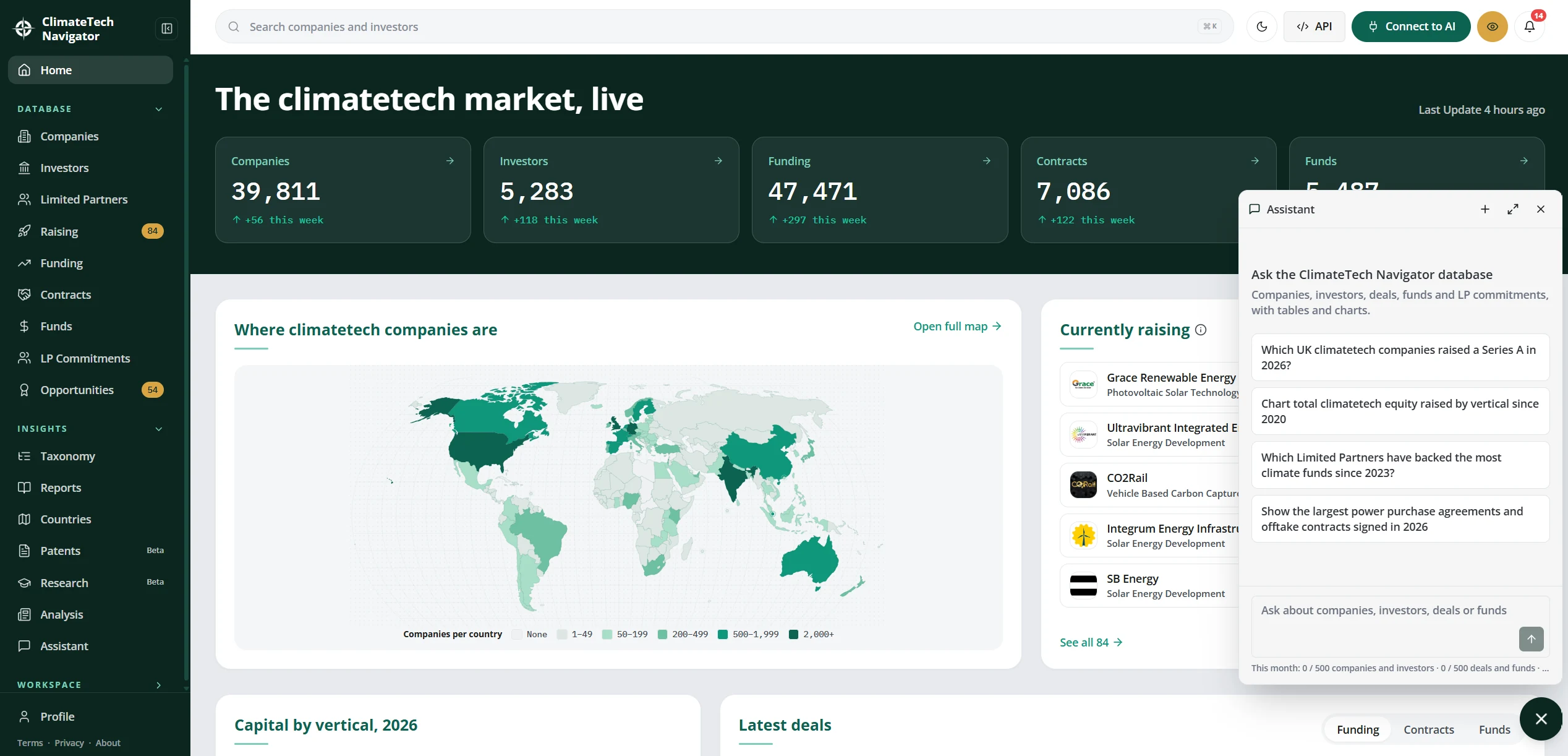
ClimateTech Navigator has tracked eight earlier funding rounds for Zipline, going back to 2014. The new round is two and a half times the $600m the company raised in January 2026 at a $7.6bn valuation, so its valuation has almost tripled in about ten months. Across the transport vertical, ClimateTech Navigator has tracked eight late-stage rounds dated 2026 with $18.5bn disclosed in total, and Zipline's two rounds this year account for $2.1bn of that.
Sources: Inside Unmanned Systems, Commercial UAV News, Patterns (2022), Nature Communications (2018), TechCrunch, 5 November 2026. Company profile
 The ClimateTech Navigator platform