Harbinger, the Garden Grove, California company that makes electric medium-duty vehicles, raised $240 million in a Series D round co-led by Tiger Global, Capricorn's Technology Impact Fund and Ridgeline, it announced on 5 November 2026 in a press release. The company says it has now raised more than $650 million since its founding in 2021.
The release names a long list of other investors: Fidelity Management & Research Company, Squarepoint Capital and Xantium as crossover investors; Maniv, Greycroft, Australian Gulf Capital, PanaceaVC, ArcTern Ventures and Leitmotif as returning investors; and FedEx and THOR Industries, through TechNexus, as strategic investors in mobility, with BuildGroup as a strategic investor in data centres. Goldman Sachs and Morgan Stanley acted as placement agents.
Harbinger says the new money will support expansion across commercial vehicles, energy storage systems, power generation, autonomy software and defence applications, alongside the continued ramp-up of its medium-duty platform manufacturing capacity. The company describes itself as an American industrial technology platform company. Chief executive John Harris said: "Electrification is at the core of everything we do, and increasingly, electrification is at the core of industry, defense, mobility, and AI." Griffin Schroeder, a partner at Tiger Global, said: "Harbinger excels at electrification, and electrification has become one of the most pressing bottlenecks of the AI era."
The release also says FedEx recently placed an order for 2,000 all-electric Harbinger trucks valued at more than $300 million, and that Paul Melander, FedEx's senior vice president of safety and transportation, has joined Harbinger's board.
The climate case
Harbinger's electric medium-duty vehicles replace the diesel and petrol step vans and box trucks that deliver parcels and goods in towns and cities. Medium- and heavy-duty vehicles produce 21% of US transport greenhouse gas emissions, according to a peer-reviewed study on PubMed Central, and delivery trucks of this size usually cover under 100 miles a day with many stops, an urban cycle that suits batteries, according to a review in Current Sustainable/Renewable Energy Reports. The FedEx order for 2,000 trucks shows where the savings would land, in parcel vans that would otherwise burn fuel on every route.
Harbinger has not published a per-vehicle emissions figure in the sources reviewed, and the saving depends on the grid that charges the trucks. Part of the new money goes into energy storage, power generation, autonomy software and defence, where the climate link is weaker or absent, so the climate case rests on the truck business.
How it fits the data
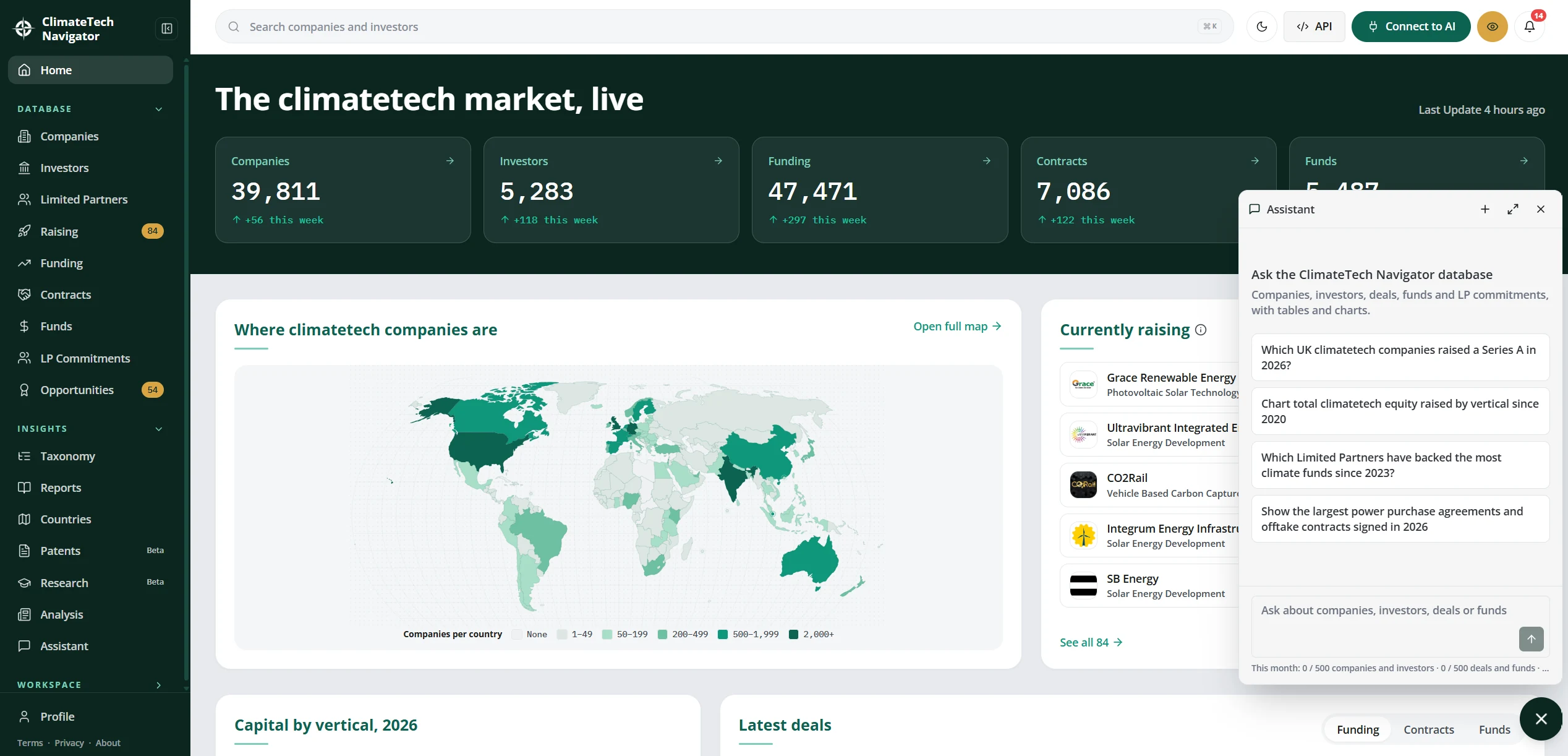
ClimateTech Navigator tracks five Harbinger rounds: a $24.7 million seed in January 2022, a $73 million Series A in September 2023, a $100 million Series B in January 2025, a $160 million Series C in November 2025 and this Series D, which together come to $597.7 million. The company's own figure of more than $650 million is higher than that tracked total. In the transport vertical, ClimateTech Navigator has tracked 5 Series D rounds so far in 2026, against 3 in the whole of 2025.
Sources: PubMed Central study, Current Sustainable/Renewable Energy Reports, Harbinger press release on PR Newswire. Company profile
 The ClimateTech Navigator platform