Nigerian biochar developer AirSmat has signed a carbon removal purchase agreement with European investment company VP Capital, Carbon Herald reported on 23 November 2026. VP Capital is buying the removal linked to the production of more than 10,000 bags of BROWN, AirSmat's biochar-based fertiliser made from agricultural residues. Neither side disclosed the number of tonnes, the price or the delivery period.
BROWN is a fortified fertiliser that farmers apply to their land across Nigeria. AirSmat says the product improves soil health while storing carbon in the soil over the long term, and that turning crop waste into a farm input addresses declining soil fertility in the region. Chief executive Soji Sanyaolu described the arrangement as "one production process, over 10,000 bags of fertilizer, two revenue streams", with fertiliser sales and carbon removal revenue coming from the same output. AirSmat is one of four projects VP Capital selected to support through the remove accelerator programme, and the company says it will use the deal to expand biochar production, reach more farmers and work towards delivering independently verified removals. Its longer-term aim, in its own words, is to regenerate millions of hectares of degraded farmland across Africa.
The climate case
This is a removal credit. Pyrolysis turns crop residues, which would otherwise decompose and release their carbon within a few years, into a more stable form of carbon that is then spread on fields as part of the fertiliser. The announcement does not name a registry, methodology or verifier, and AirSmat describes independent verification as a goal for its next phase rather than something already in place. Buyers therefore cannot yet check how many tonnes each bag represents or how that figure was calculated, and the announcement does not say how application on individual farms will be tracked.
How long biochar carbon stays in soil is still being worked out. Puro.earth, which certifies biochar removals, wrote in November 2025 that the evidence for 1,000-year persistence "has not yet reached strong consensus" and that it issues biochar credits with durability labels of at most several centuries. A 2025 study in Environmental Research Letters found that standards bodies use different methods to estimate durability, and argued that methods relying on a single chemical ratio may not reflect differences in feedstock or soil conditions.
How it fits the data
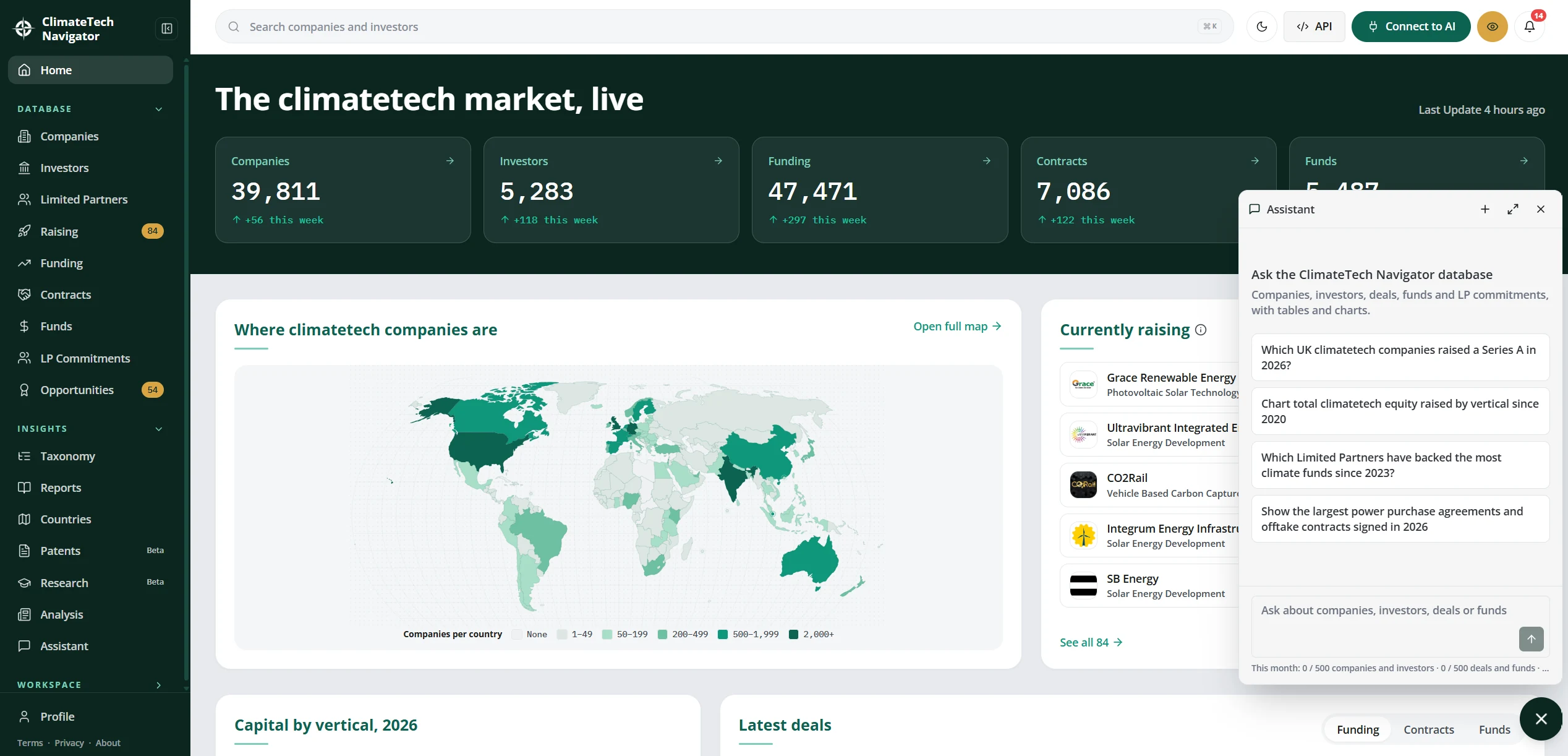
ClimateTech Navigator has tracked 34 biochar carbon credit deals in 2026, covering about 2.1 million tonnes where volumes were disclosed, and 106 removal deals in all among the carbon market transactions it follows this year. AirSmat already appears in the tracker for a March 2026 partnership with Dantata Foods and Allied Products and for blended finance in September 2026 from Village Capital's Africa Ecosystem Catalysts Facility, which is backed by FMO and the Netherlands Enterprise Agency.
Sources: Carbon Herald, 23 November 2026; Puro.earth, November 2025; Environmental Research Letters, February 2025. Company profile
 The ClimateTech Navigator platform